
Arthritis, Bursitis & Tendonitis Care in Grand Rapids
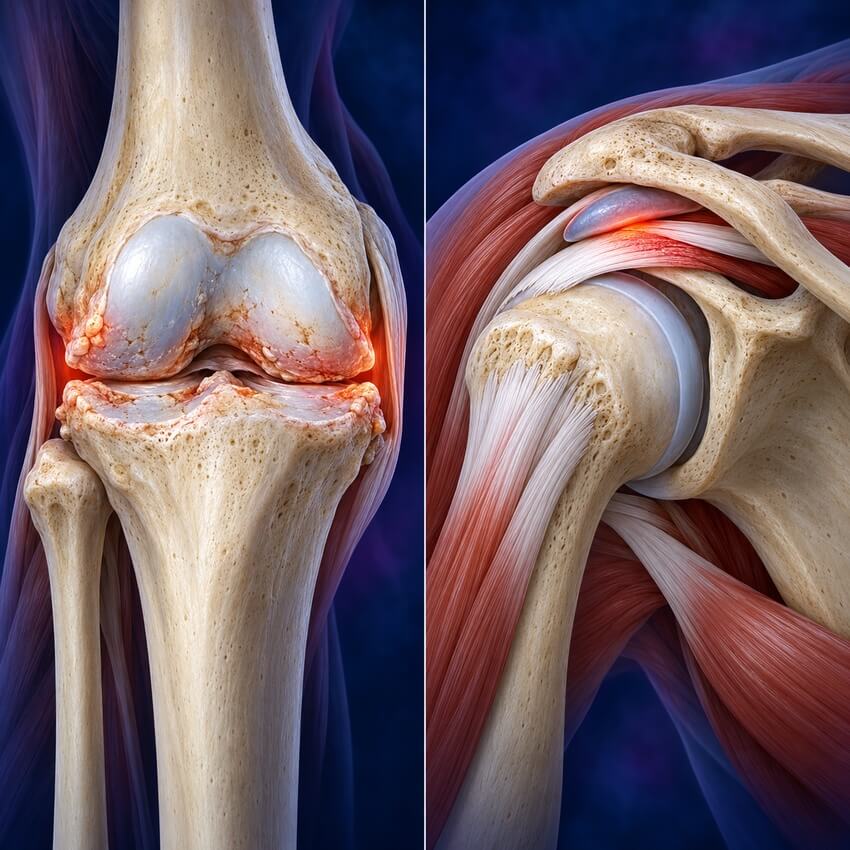 Stiff knees on cold Minnesota mornings. A shoulder that aches when you reach. A hip that hurts when you lie on it, or an elbow that flares up every time you grip a tool. Arthritis, bursitis, and tendonitis are some of the most common reasons people live with joint pain, and many people are told there’s nothing to do but take pills. There’s often a lot more that can help. We look for the cause of the problem instead of just covering up the symptoms.
What’s the Difference?
- Osteoarthritis is wear on the cartilage that cushions a joint. It often causes stiffness that’s worst in the morning or after sitting, and loosens up as you move.
- Bursitis is irritation of a bursa, a small fluid-filled cushion that lets tendons and muscles glide over bone. It’s common at the outer hip, shoulder, elbow, and knee, and is often worse when you lie on it or press on it.
- Tendonitis is irritation of a tendon, the cord that connects muscle to bone. It usually hurts with use and is common in the shoulder, elbow, wrist, knee, and heel.
What Do You Notice?
| What you notice | What may be involved |
|---|---|
| Joint stiffness in the morning that eases within about 30 minutes of moving | Osteoarthritis |
| Tender spot over a bony point, worse lying on it | Bursitis |
| Pain where a muscle attaches, worse with use or gripping | Tendonitis |
| Several swollen joints on both sides, with morning stiffness over an hour | Possible inflammatory arthritis. We’ll refer you to your medical provider. |
This is a general guide, not a diagnosis. An exam is what sorts it out.
Joints We Commonly Help
- Shoulder: rotator cuff tendonitis and shoulder bursitis
- Elbow: tennis and golfer’s elbow
- Wrist and hand
- Hip: hip arthritis and outer hip bursitis
- Knee: knee arthritis and tendonitis
- Foot and heel: plantar fasciitis and Achilles tendonitis
- Spine: spinal arthritis and degenerative discs
How We Find the Source
We start with your history: which joints hurt, when, and what makes them better or worse. Then we check range of motion, strength, swelling, and tenderness, and look at how the joints above and below are moving, since a stiff hip can overload a knee and a stiff neck can overload a shoulder. We take X-rays right here in our office when needed to see joint space, arthritis, and bone spurs. If your exam suggests inflammatory arthritis, gout, or something that needs medical care, we’ll refer you.
How Chiropractic Care May Help
The goal is to keep joints moving, calm flare-ups, and build strength so you can stay active. Depending on what we find, your plan may include:
- Laser therapy to help calm pain and inflammation in irritated joints, bursae, and tendons
- Gentle adjustments, including low-force instrument adjusting, to restore joint motion
- Graston Technique and Active Release Techniques for tight muscles and irritated tendons
- Massage therapy for tight muscles around sore joints
- Strengthening and mobility exercises you can do at home
- Nutritional support to help calm inflammation from the inside
- Tips for activity, sleep positions, and staying ahead of flare-ups
Nutritional Support for Joint Health
What you eat can affect how inflamed your joints feel. Through our nutrition support program, we can help you build an anti-inflammatory eating plan and recommend quality, whole-food supplements that support joint and tissue health. Combined with hands-on care, it gives your body more of what it needs to calm flare-ups and stay active.
When to Get Medical Care Right Away
Get prompt medical care for a hot, red, swollen joint with fever, which can be a joint infection; a sudden, very painful swollen joint, which can be gout; several swollen joints with fatigue or fever; a joint you can’t bear weight on after an injury; or joint pain with unexplained weight loss.
Frequently Asked Questions
Can a chiropractor help arthritis?
We can’t reverse arthritis, but many people move better and hurt less with gentle adjustments, laser therapy, soft tissue work, and the right exercises. We use your X-rays and exam to choose techniques that are safe for your joints. For more background, read our article One Hundred Types of Arthritis?
Is it safe to adjust arthritic joints?
For most people, yes. We use gentle and low-force instrument options when they’re a better fit, and we never force a joint.
How does laser therapy help bursitis and tendonitis?
Laser therapy uses focused light to help calm inflammation and support healing in irritated tissues. Treatment takes just minutes, and most people feel little more than mild warmth.
Should I rest or stay active?
Short rest during a bad flare can help, but staying gently active usually keeps arthritic joints healthier. We’ll show you which movements help and which to avoid.
Do I need a referral?
No. You can see a chiropractor in Minnesota without a referral. Some insurance plans have their own rules, and our front desk can help you check your benefits.
Stay Active With Less Joint Pain
If joint pain is keeping you from work, hobbies, or a good night’s sleep, Davis Chiropractic Health & Wellness, P.A. can help you find out what’s going on and build a plan to keep you moving. Reach out to our practice today to schedule your evaluation.
