
Ankle Sprain Treatment in Grand Rapids
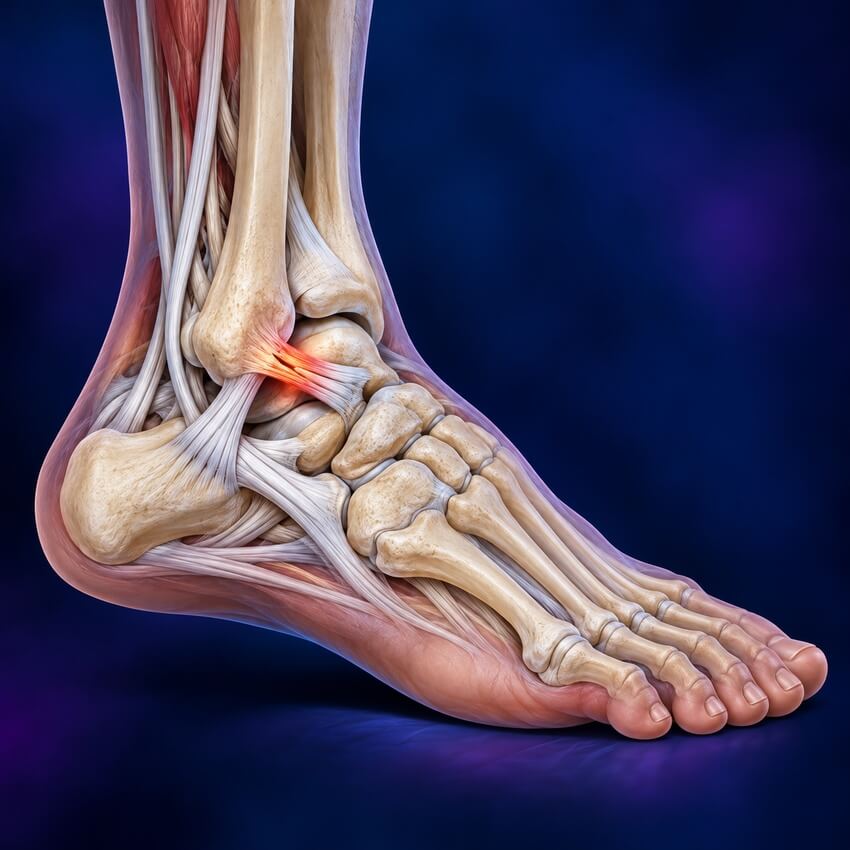 One wrong step on the ice, a missed step off the truck, an uneven trail, or a bad landing on the court, and your ankle rolls. Most people ice it, wrap it, and hope for the best. But a sprain that isn’t rehabbed well often leaves the ankle stiff, weak, and likely to roll again. We look for the cause of the problem instead of just covering up the symptoms.
What Is an Ankle Sprain?
An ankle sprain is a stretch or tear of the ligaments that hold the ankle bones together. The most common sprain happens when the foot rolls inward and injures the ligaments on the outside of the ankle. Sprains are graded from mild (stretched ligament) to severe (complete tear). Even a “mild” sprain can leave lasting stiffness, swelling, and poor balance if it isn’t treated well.
Common Signs
- Pain and swelling around the ankle, often on the outside
- Bruising that spreads into the foot over a few days
- Pain when walking, going down stairs, or turning
- Stiffness, especially first thing in the morning
- An ankle that feels weak or unstable, or keeps rolling
Where Does It Hurt?
| Where you feel it | What may be involved |
|---|---|
| Outside of the ankle after rolling it in | Lateral ankle sprain (most common) |
| Above the ankle, between the two lower leg bones | High ankle sprain, which usually takes longer to heal |
| Inside of the ankle | Medial (deltoid) ligament sprain |
| Ankle keeps giving way months after an old sprain | Chronic ankle instability from a sprain that didn’t fully rehab |
This is a general guide, not a diagnosis. An exam is what sorts it out.
How We Evaluate Your Ankle
We start with how the injury happened and whether you could walk afterward. Then we check swelling, range of motion, ligament stability, and specific bony spots that help us decide if a fracture needs to be ruled out. When indicated, we take X-rays right here in our office the same day. We also look at your foot, knee, and hip, since how you move above and below the ankle affects how well it heals and whether it rolls again.
Our Approach: Laser, IFC, and ART
We combine three therapies to calm the injury fast and help the ligament heal strong:
- Laser therapy: helps calm pain and inflammation and supports the healing process in the injured ligament
- Interferential current (IFC): a comfortable electrical therapy that helps reduce pain and swelling, especially in the first days after a sprain
- Active Release Techniques (ART): hands-on soft tissue work that breaks up scar tissue and tightness around the ankle and calf so the joint moves freely again
Depending on what we find, your plan may also include:
- Gentle adjustments to the ankle and foot joints to restore motion
- Kinesio taping for support while you heal
- Balance and strengthening exercises to keep the ankle from rolling again
- Custom orthotics when foot mechanics are part of the problem
When to Get Medical Care Right Away
Go to urgent care or the ER if you can’t take four steps on the injured leg, the ankle or foot looks deformed, the foot is numb, cold, or pale, or you felt a pop at the back of the heel and can’t push off with your toes, which can mean an Achilles tendon tear. A hot, red, swollen ankle with fever and no injury also needs prompt medical care.
Frequently Asked Questions
Should I ice my sprained ankle?
In the first day or two, short bouts of ice, gentle compression, and elevation can help with pain and swelling. Getting the ankle moving gently and starting treatment early usually leads to a better recovery than long rest.
Do I need an X-ray?
Not every sprain needs one. If you can’t bear weight or have tenderness over specific spots on the bones, an X-ray helps rule out a fracture. We can take one in our office the same day.
What is IFC?
Interferential current is a comfortable electrical therapy applied with small pads around the ankle. Most people feel a gentle tingling. It’s used to help reduce pain and swelling and pairs well with laser therapy in the same visit.
Why does my ankle keep rolling?
After a sprain, the ligaments can stay loose and the ankle loses some of its balance sense. Without rehab, that leaves it prone to rolling again. Balance and strengthening exercises are key to stopping the cycle.
Do I need a referral?
No. You can see a chiropractor in Minnesota without a referral. Some insurance plans have their own rules, and our front desk can help you check your benefits.
Get Back on Your Feet
If an ankle sprain is slowing you down, or an old one keeps giving way, Davis Chiropractic Health & Wellness, P.A. can help you heal right and keep it from happening again. Reach out to our practice today to schedule your evaluation.
