
Vertigo & Dizziness Treatment in Grand Rapids
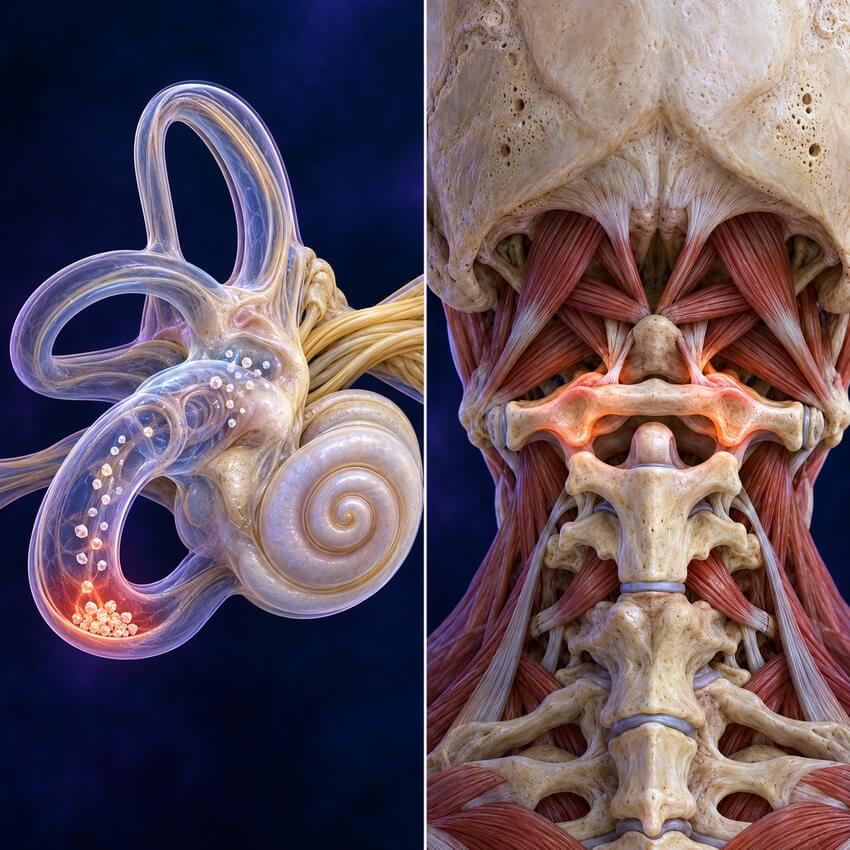 The room spins when you roll over in bed. You feel off balance when you look up to a high shelf. Or you’ve felt foggy and unsteady ever since a neck injury. Dizziness can be scary, and it has many possible causes. Some of the most common ones come from the inner ear and the upper neck, and both often respond well to gentle, targeted care. We look for the cause of the problem instead of just covering up the symptoms.
Important: Some Dizziness Needs a Doctor First
Call 911 or go to the ER right away if dizziness comes on suddenly with any of these: face drooping, arm or leg weakness or numbness, trouble speaking, double vision or vision loss, trouble walking, a sudden severe headache, chest pain, shortness of breath, or fainting. These can be signs of a stroke or heart problem. Also see a medical provider promptly for dizziness with sudden hearing loss, or dizziness after a head injury.
Two Common Causes We Treat
BPPV (benign paroxysmal positional vertigo) is the most common cause of vertigo. Tiny calcium crystals in the inner ear drift out of place and into one of the balance canals. When you move your head a certain way, like rolling over in bed, lying down, or looking up, the crystals shift and trigger a short burst of spinning that usually lasts less than a minute.
Cervicogenic dizziness comes from the neck. The upper neck, especially the top vertebra called the atlas (C1), is packed with sensors that tell your brain where your head is. When the upper neck is stiff, misaligned, or injured, as after whiplash, those signals can get scrambled and leave you feeling unsteady or lightheaded, often along with neck pain and headaches.
What Kind of Dizziness Do You Have?
| What you notice | What may be involved |
|---|---|
| Brief spinning when you roll over in bed, lie down, or look up | BPPV (inner ear crystals) |
| Unsteadiness with neck pain or stiffness, or after whiplash | Cervicogenic dizziness (upper neck) |
| Spinning that lasts hours, with hearing loss, ringing, or ear fullness | Possible Meniere’s disease. We’ll refer you to an ear specialist. |
| Constant dizziness that started after a cold or virus | Possible inner ear inflammation. We’ll refer you to your medical provider. |
| Lightheaded or faint when you stand up | Possible blood pressure or heart issue. See your medical provider. |
This is a general guide, not a diagnosis. Dizziness has many causes, and a careful exam is what sorts it out.
How We Find the Source
We start with a detailed history: what the dizziness feels like, how long it lasts, and what brings it on. Then we screen for warning signs, check your balance and eye movements, and perform positional tests like the Dix-Hallpike to look for BPPV. We also examine how your upper neck moves, and when indicated we take X-rays in our office, including an open-mouth view to see how the atlas (C1) is sitting. If your exam points to something outside our care, we’ll refer you to the right provider.
Our Approach: Epley Maneuver, Atlas Adjusting, and Laser
- Epley maneuver: for BPPV, a series of guided head and body positions that moves the loose crystals out of the balance canal and back where they belong. Many people feel better after one or two treatments.
- Atlas (C1) adjustments: gentle, specific adjustments to the upper neck to restore normal motion and alignment, which may help calm dizziness that comes from the neck
- Laser therapy: applied to the tight, irritated muscles and tissues of the upper neck to help calm inflammation and support healing
Depending on what we find, your plan may also include soft tissue work for the neck, balance exercises, and simple home tips to help prevent BPPV from coming back.
Frequently Asked Questions
What is the Epley maneuver?
The Epley maneuver is a gentle series of head and body positions, held for about 30 seconds each, that guides loose inner ear crystals out of the balance canal. It’s a well-established treatment for BPPV and often brings quick relief.
Can a neck problem really make me dizzy?
Yes. The upper neck sends constant signals to your brain about head position. When the atlas and upper neck joints are stiff, misaligned, or injured, those signals can be off and leave you unsteady, especially with neck pain or after whiplash.
Is it safe to get adjusted if I’m dizzy?
We screen carefully for warning signs before any treatment. When care is a good fit, we use gentle, specific techniques. If anything in your exam points to a medical cause, we’ll refer you first.
Will my vertigo come back?
BPPV can return, especially after an illness, head injury, or long periods lying down. If it does, the Epley maneuver can be repeated, and we’ll show you tips to lower the chance of it coming back.
Do I need a referral?
No. You can see a chiropractor in Minnesota without a referral. Some insurance plans have their own rules, and our front desk can help you check your benefits.
Get Your Balance Back
If dizziness or spinning is making it hard to work, drive, or sleep, Davis Chiropractic Health & Wellness, P.A. can help you find out why and build a plan to get you steady again. Reach out to our practice today to schedule your evaluation.
