
TMJ & Jaw Pain Treatment in Grand Rapids
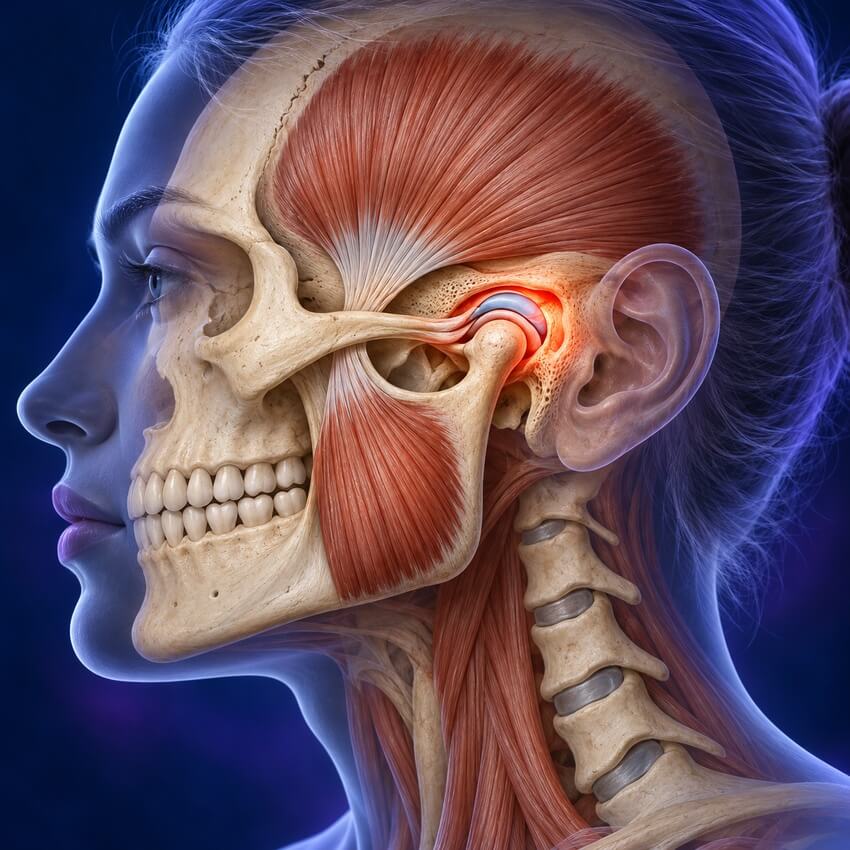 A jaw that clicks or pops every time you chew. Soreness when you wake up. Headaches at your temples, or an earache with no ear infection. TMJ problems are more common than most people realize, and they’re often tied to the neck, posture, and stress. We look for the cause of the problem instead of just covering up the symptoms.
What Is TMJ?
The temporomandibular joints (TMJs) connect your lower jaw to your skull, just in front of each ear. Each joint has a small disc that cushions it as you open, close, and chew. When the joint gets stiff, the disc slips out of place, or the jaw muscles stay tight from clenching and grinding, the result can be pain, clicking, limited opening, and headaches. Doctors often call this temporomandibular disorder, or TMD.
Common Signs
- Jaw pain or soreness, especially in the morning or after chewing
- Clicking, popping, or grinding sounds when you open or close
- Trouble opening your mouth all the way, or a jaw that catches or locks
- Headaches at the temples or around the jaw
- Ear pain, fullness, or ringing without an ear infection
- Neck and shoulder tension that goes along with jaw pain
What Causes It?
- Clenching or grinding your teeth, often during sleep or stress
- Forward head posture, which changes how the jaw sits and works. See our posture and tech neck page.
- Tight neck and shoulder muscles. See our neck pain page.
- Whiplash, a fall, or a blow to the jaw
- Long dental appointments with the mouth held open
- Chewing gum, biting nails, or chewing on one side
What Do You Notice?
| What you notice | What may be involved |
|---|---|
| Clicking or popping when you open or close | The small disc inside the joint moving out of its normal position |
| Sore jaw and temple headaches when you wake up | Clenching or grinding at night, tight jaw muscles |
| Jaw that catches or won’t open all the way | Joint stiffness or a disc that is stuck |
| Jaw pain with neck pain and headaches | Neck and posture involvement. See our headaches page. |
This is a general guide, not a diagnosis. An exam is what sorts it out.
How We Find the Source
We start with your history: when it started, what triggers it, and habits like clenching, grinding, or gum chewing. Then we measure how far your jaw opens, watch how it moves side to side, listen for clicking, and check the jaw, neck, and shoulder muscles for tightness and trigger points. We also look at your posture and neck motion, since the jaw and neck work together. If we suspect a dental problem or need for a night guard, we’ll work with your dentist.
How Chiropractic Care May Help
Many TMJ problems respond well to conservative care that treats the joint, the muscles, and the neck together. Depending on what we find, your plan may include:
- Gentle mobilization and adjusting of the jaw joint
- Soft tissue work and Active Release Techniques for the chewing muscles at the jaw and temples
- Laser therapy over the joint to help calm pain and inflammation
- Neck and upper back adjustments to reduce tension that feeds into the jaw
- Massage therapy for the neck, shoulders, and jaw muscles
- Simple jaw exercises and tips for clenching, sleep position, and posture
When to Get Medical or Dental Care Right Away
Call 911 or go to the ER if jaw pain comes with chest pain or pressure, shortness of breath, sweating, or nausea, since jaw pain can be a sign of a heart attack. Also get prompt care if your jaw is locked open, you had a blow to the face and your bite feels off, or you have swelling, fever, or a bad tooth, which can mean an infection. Adults over 50 with new temple pain, scalp tenderness, jaw pain when chewing, or vision changes should see a medical provider the same day.
Frequently Asked Questions
Can a chiropractor help TMJ?
Yes. Many people get relief from gentle jaw mobilization, soft tissue work on the jaw muscles, laser therapy, and treating the neck and posture that feed into jaw tension. We’ll coordinate with your dentist when a night guard or dental care is needed.
Is jaw clicking a problem?
Clicking without pain is common and often isn’t a concern. Clicking with pain, catching, or limited opening is worth having checked.
Can TMJ cause headaches and ear pain?
Yes. The jaw muscles attach near the temples, and the joint sits right in front of the ear. TMJ problems commonly cause temple headaches and ear pain or fullness without an ear infection.
What can I do at home?
Eat softer foods during flare-ups, avoid gum and chewing on one side, keep your teeth apart when you’re not eating, and notice when you clench during the day. Warm compresses can help sore jaw muscles. For more tips, read our article Living and Dealing with TMJ.
Do I need a referral?
No. You can see a chiropractor in Minnesota without a referral. Some insurance plans have their own rules, and our front desk can help you check your benefits.
Chew, Talk, and Smile Without Pain
If jaw pain, clicking, or headaches are wearing on you, Davis Chiropractic Health & Wellness, P.A. can help you find out why and build a plan to get you relief. Reach out to our practice today to schedule your evaluation.
