
Occipital Neuralgia Treatment in Grand Rapids
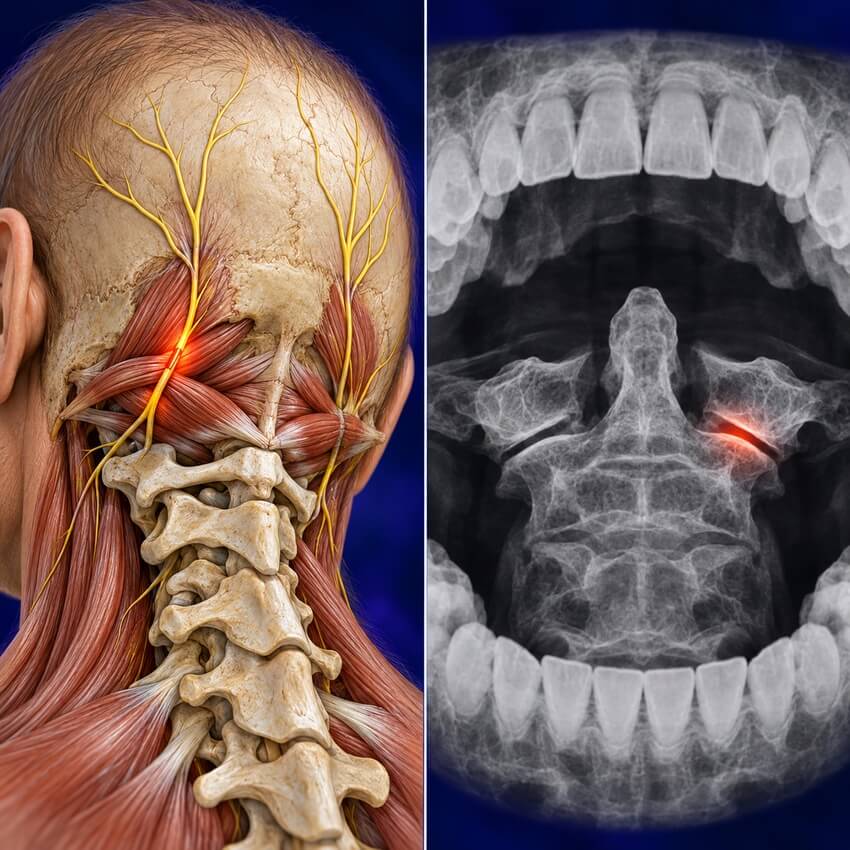 A sharp, shooting, or electric pain that starts at the base of your skull and zaps up the back of your head. A scalp so tender that resting your head on a pillow or brushing your hair hurts. Occipital neuralgia is often mistaken for migraines or tension headaches, but it has its own source and it often responds well to care aimed at the upper neck. We look for the cause of the problem instead of just covering up the symptoms.
What Is Occipital Neuralgia?
The occipital nerves leave the top of the spine in the upper neck and travel up through the muscles at the base of the skull into the scalp. When those nerves get irritated or squeezed by tight muscles, stiff upper neck joints, or injury, they can fire off sharp, shooting pain along their path, usually on one side of the head.
Common Signs
- Sharp, stabbing, shooting, or electric pain at the base of the skull
- Pain that travels up the back of the head, sometimes to behind the eye
- A tender scalp, worse when lying on a pillow or brushing your hair
- Pain triggered by turning your head or holding it in one position
- A constant ache between the sharp attacks
What Causes It?
- Tight muscles at the base of the skull from posture, stress, and screen time. See our posture and tech neck page.
- Stiffness or arthritis in the upper neck joints
- Whiplash or a fall that strained the upper neck. See our auto accident page.
- Long hours looking down or holding the head forward
- Sleeping on a pillow that is too high or too flat
Is It Occipital Neuralgia or Another Headache?
| What you notice | What may be involved |
|---|---|
| Sharp, shooting, or electric pain from the base of the skull up one side of the head | Occipital neuralgia |
| Dull, aching headache that starts in the neck, worse with neck stiffness | Cervicogenic headache. See our headaches page. |
| Throbbing headache with light sensitivity or nausea | Migraine. See our migraines page. |
| Tight band or pressure around the head | Tension headache |
This is a general guide, not a diagnosis. Headache types often overlap, and an exam is what sorts it out.
How We Find the Source
We start with your history: what the pain feels like, where it travels, and what sets it off. Then we check how your upper neck moves, press on the muscles and nerves at the base of the skull to see if they reproduce your pain, and look at your posture and neurological signs. When indicated, we take X-rays right here in our office, including an open-mouth (APOM) view of the upper neck. This view looks through the open mouth at the top two vertebrae, the atlas (C1) and axis (C2), so we can see how the atlas is sitting and whether the upper cervical joints are aligned and moving symmetrically. That tells us exactly where to focus care. If anything suggests a different cause, we’ll refer you to the right provider.
How Chiropractic Care May Help
When tight muscles and stiff upper neck joints are putting pressure on the occipital nerves, easing that pressure often brings relief. Depending on what we find, your plan may include:
- Gentle upper neck adjustments, including low-force instrument options
- Soft tissue work and Active Release Techniques for the muscles at the base of the skull
- Laser therapy to help calm irritated tissues
- Massage therapy for the neck and shoulders
- Posture exercises, workstation changes, and pillow tips
When to Get Emergency Care
Call 911 or go to the ER right away for a sudden, severe “worst headache of your life,” a headache with fever and a stiff neck, a headache after a head injury, or a headache with weakness, numbness, confusion, trouble speaking, or vision loss. Adults over 50 with a new headache, scalp tenderness, jaw pain when chewing, or vision changes should see a medical provider the same day.
Frequently Asked Questions
How is occipital neuralgia different from a migraine?
Occipital neuralgia causes sharp, shooting, or electric pain from the base of the skull up the back of the head. Migraines are usually throbbing and often come with light sensitivity and nausea. Some people have both, and an exam helps sort them out.
Can a chiropractor help occipital neuralgia?
Many people get relief when the tight muscles and stiff upper neck joints that press on the occipital nerves are treated. We use an open-mouth X-ray to check upper cervical alignment of the atlas, choose gentle techniques that fit, and will refer you if your symptoms point to another cause.
Why does my scalp hurt to touch?
The occipital nerves supply feeling to the back of the scalp. When they’re irritated, the scalp can become very sensitive, even to a pillow or a hairbrush.
How long until I feel better?
Many people notice fewer and milder attacks within the first few weeks of care. Longer-standing cases take more time. We’ll give you a realistic timeline after your exam.
Do I need a referral?
No. You can see a chiropractor in Minnesota without a referral. Some insurance plans have their own rules, and our front desk can help you check your benefits.
Find Relief From Shooting Head Pain
If sharp pain at the base of your skull is making it hard to work, sleep, or focus, Davis Chiropractic Health & Wellness, P.A. can help you find out why and build a plan to get you relief. Reach out to our practice today to schedule your evaluation.
