
Herniated & Bulging Disc Treatment in Grand Rapids
 Being told you have a herniated or bulging disc can be scary, especially when the pain shoots down your leg or arm and makes sitting, standing, or sleeping hard. The good news is that many disc problems improve with conservative care. We look for the cause of the problem instead of just covering up the symptoms.
What Is a Herniated or Bulging Disc?
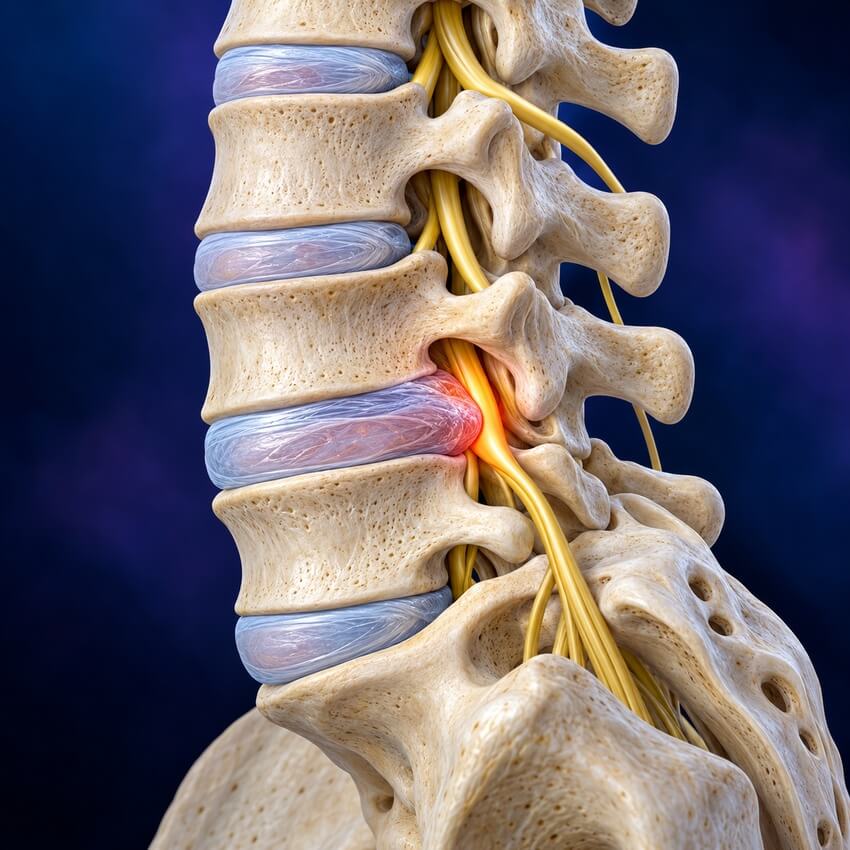
Discs are the cushions between the bones of your spine. Each one has a tough outer ring and a softer, gel-like center. A bulging disc pushes outward evenly, like a tire low on air. A herniated disc happens when part of the softer center pushes through a weak spot in the outer ring. Either one can press on or irritate a nearby nerve, which is why the pain often travels down a leg or arm.
Common Signs of a Disc Problem
- Low back or neck pain that is worse with sitting, bending, coughing, or sneezing
- Pain that travels down the leg (sciatica) or down the arm
- Numbness, tingling, or pins and needles in the leg, foot, arm, or hand
- Weakness, such as a foot that catches or a weaker grip
- Pain that eases when you lie down or change positions
What Causes Disc Problems?
- Lifting while bent and twisted, like loading wood, a deer, or a snowblower
- Long hours of sitting, driving, or running heavy equipment
- Normal wear and tear on the discs with age
- A fall, sports injury, or car accident
- Weak core muscles and limited motion in the spine and hips
Where Do You Feel It?
Where your symptoms travel gives us clues about which disc may be involved:
| Where you feel it | Disc level often involved |
|---|---|
| Low back, down the back or side of the leg to the foot | Lower lumbar (L4-L5, L5-S1) |
| Low back and front of the thigh | Upper lumbar (L2-L4) |
| Neck, shoulder blade, and down the arm into the hand | Cervical (neck). See our arm & hand numbness page. |
This is a general guide, not a diagnosis. Patterns overlap, and an exam is what sorts it out.
How We Find the Source
We start with your history and what makes the pain better or worse. Then we check your reflexes, strength, and sensation, and use orthopedic tests to see whether a nerve is being irritated and at what level. X-rays in our office show the bones and alignment of the spine. Discs don’t show up on X-rays, so if your exam suggests a significant disc injury or you aren’t improving, we’ll refer you for an MRI or to a specialist.
How Chiropractic Care May Help
Many people with disc problems improve without surgery. Care focuses on calming the irritated area, restoring motion to the spine and hips, and reducing stress on the disc. Depending on what we find, your plan may include:
- Gentle, appropriate adjustments to the spine and pelvis
- Traction to gently take pressure off the disc and nerve
- Laser therapy to help calm pain and inflammation
- Massage therapy for tight, guarded muscles
- Positions and exercises that ease leg or arm symptoms, then core strengthening
- Guidance on sitting, lifting, and sleeping to protect the disc while it heals
When to Get Emergency Care
Call 911 or go to the ER right away if back pain comes with loss of bladder or bowel control, numbness in the groin or inner thighs, or weakness in both legs. Also get urgent care for weakness that is getting worse quickly, such as a foot that suddenly drags, or back pain after a serious fall or accident.
Frequently Asked Questions
Is it safe to see a chiropractor for a herniated disc?
For most people, yes. We do a thorough exam first and choose techniques that fit your condition. If anything in your exam suggests care should start elsewhere, we’ll tell you and refer you.
What’s the difference between a bulging and a herniated disc?
A bulging disc pushes outward evenly around its edge. A herniated disc has a tear that lets some of the inner material push out. Both can irritate nerves, and both often respond to conservative care.
Do I need an MRI first?
Not usually. Most disc problems can be evaluated with a hands-on exam. An MRI is helpful if you have significant weakness, aren’t improving, or might be a candidate for injections or surgery. We’ll let you know if you need one.
Will I need surgery?
Most people with a herniated disc never need surgery. Many improve over several weeks to a few months with conservative care. Surgery is usually considered when there is severe or worsening weakness or when symptoms don’t improve.
Do I need a referral?
No. You can see a chiropractor in Minnesota without a referral. Some insurance plans have their own rules, and our front desk can help you check your benefits.
Get Back to Moving Without Fear
If disc pain is limiting how you sit, work, or sleep, Davis Chiropractic Health & Wellness, P.A. can help you find out what’s going on and build a plan to get you moving again. Reach out to our practice today to schedule your evaluation.
