
Tennis Elbow & Golfer’s Elbow Treatment in Grand Rapids
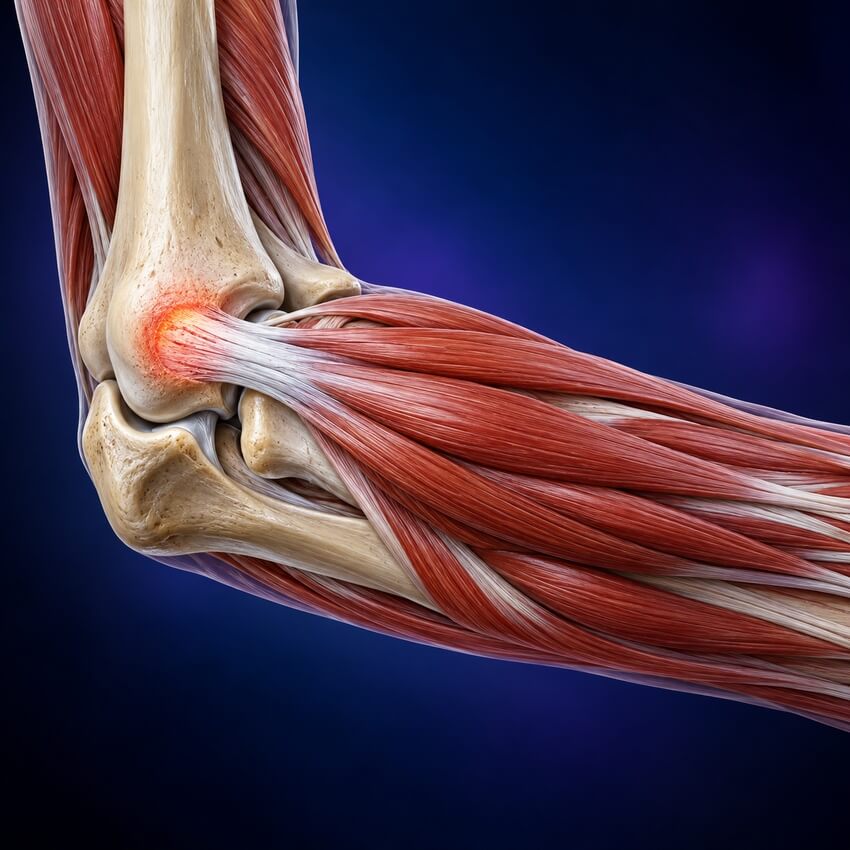 Pain when you grip a hammer, turn a wrench, lift a gallon of milk, or shake hands. An elbow that aches after a day of work and doesn’t seem to get better on its own. Tennis elbow and golfer’s elbow are some of the most stubborn problems we see, and some of the most rewarding to treat. We look for the cause of the problem instead of just covering up the symptoms.
What Are Tennis Elbow and Golfer’s Elbow?
Both are overuse injuries of the tendons that attach your forearm muscles to the elbow. Tennis elbow affects the outside of the elbow, where the muscles that lift your wrist and fingers attach. Golfer’s elbow affects the inside of the elbow, where the muscles that grip and bend your wrist attach. Despite the names, most people who get them don’t play tennis or golf. Repeated gripping, twisting, and lifting cause small amounts of tendon damage, and the forearm muscles get tight, ropey, and full of adhesions that keep pulling on the sore tendon.
Common Signs
- Pain on the outside or inside of the elbow that may travel into the forearm
- Pain with gripping, twisting, or lifting, even light objects
- A weaker grip or trouble holding a cup or tool
- Stiffness and aching in the morning or after work
- Tight, tender forearm muscles
What Causes It?
- Using hand tools, drills, impact wrenches, and chainsaws
- Repetitive work like carpentry, mechanics, assembly, painting, and meat cutting
- Computer mouse use and typing for long hours
- Golf, tennis, pickleball, bowling, and weight lifting
- Splitting wood, raking, shoveling, and other yard work
Where Does It Hurt?
| Where you feel it | What may be involved |
|---|---|
| Outside of the elbow, worse gripping or lifting with the palm down | Tennis elbow (lateral epicondylitis) |
| Inside of the elbow, worse gripping or bending the wrist | Golfer’s elbow (medial epicondylitis) |
| Inside of the elbow with tingling in the ring and pinky fingers | Ulnar nerve irritation. See our arm & hand numbness page. |
| Elbow pain with neck or shoulder pain | Neck or shoulder involvement. See our neck pain and shoulder pain pages. |
This is a general guide, not a diagnosis. Patterns overlap, and an exam is what sorts it out.
How We Find the Source
We start with your history: what you do for work and hobbies, and which movements hurt. Then we test grip strength, check the tendons and forearm muscles, and look at your wrist, shoulder, and neck, since problems up the chain can add strain to the elbow. When indicated, we take X-rays in our office. If we suspect a tendon tear or something that needs further imaging, we’ll tell you and refer you.
Our Approach: ART and Laser Therapy Together
Tennis and golfer’s elbow often don’t heal on their own because two things keep feeding the problem: tight, scarred forearm muscles that keep pulling on the tendon, and a tendon that has trouble calming down and healing. We address both, and in our experience the combination works especially well.
- Active Release Techniques (ART) and myofascial release: hands-on work that breaks up adhesions and tightness in the forearm muscles so they stop pulling on the sore tendon and move freely again
- Laser therapy: applied to the tendon to help calm pain and inflammation and support the healing process
Pairing ART with laser therapy in the same visit is one of the most effective approaches we use for elbow pain. Depending on what we find, your plan may also include:
- Graston Technique for stubborn scar tissue
- Adjustments to the elbow, wrist, shoulder, and neck when restricted
- Strengthening exercises to help the tendon heal stronger
- A forearm strap and tips for gripping tools, mousing, and lifting
When to Get Medical Care Right Away
Get prompt medical care if your elbow looks deformed after a fall, you can’t bend or straighten it after an injury, you felt a pop with sudden bruising in the front of the elbow, or the elbow is hot and swollen with fever. Numbness or weakness in the hand that keeps getting worse should also be checked.
Frequently Asked Questions
Why won’t my tennis elbow go away on its own?
Rest can calm it down, but the tight, scarred forearm muscles that pull on the tendon are usually still there. As soon as you go back to work, the pain returns. Treating the muscle tissue and the tendon together helps break that cycle.
What is Active Release Techniques (ART)?
ART is a hands-on soft tissue method. We apply pressure to a tight muscle while you move it through its range, which helps break up adhesions and restore normal movement. It’s especially effective for overuse injuries like tennis and golfer’s elbow.
What does laser therapy feel like?
Most people feel little or nothing, sometimes mild warmth. Treatment over the elbow only takes a few minutes and pairs easily with ART in the same visit.
How long until my elbow feels better?
Many people notice less pain and better grip within a few visits. Longer-standing cases take more time. We’ll give you a realistic timeline after your exam.
Do I need a referral?
No. You can see a chiropractor in Minnesota without a referral. Some insurance plans have their own rules, and our front desk can help you check your benefits.
Get Back to Work and Play Without Elbow Pain
If elbow pain is making it hard to grip, lift, or swing, Davis Chiropractic Health & Wellness, P.A. can help you find out why and build a plan to get you back to full strength. Reach out to our practice today to schedule your evaluation.
