Posture, Tech Neck & Scoliosis Care in Grand Rapids
 A neck that aches by the end of the day. Shoulders that creep up toward your ears. A teenager who’s always hunched over a phone, or a school screening that says “check for scoliosis.” Posture problems build slowly, but they can lead to neck pain, headaches, and back pain that don’t go away on their own. We look for the cause of the problem instead of just covering up the symptoms.
Why Posture Matters
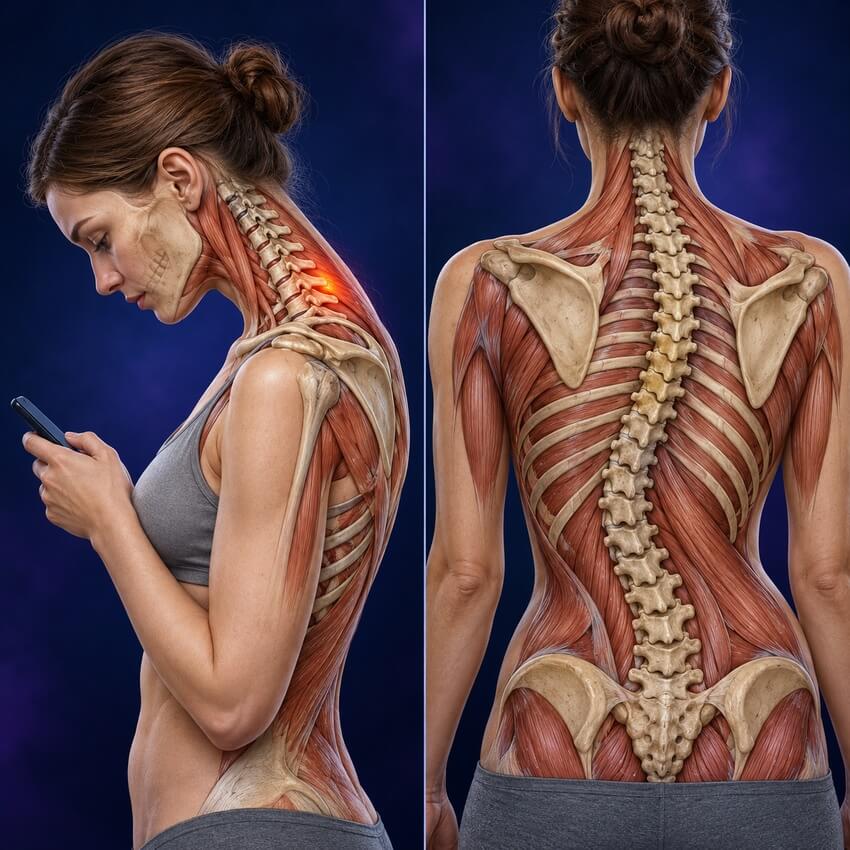
Your head weighs about 10 to 12 pounds. For every inch it drifts forward, the load on your neck and upper back goes up. Looking down at a phone, a laptop, or a dashboard for hours puts your neck in that forward position, and the muscles and joints have to work overtime to hold it there. Over time, that strain shows up as stiffness, aching, and headaches.
Common Posture Problems We See
- Tech neck: forward head posture from phones, tablets, and laptops
- Rounded shoulders: tight chest muscles and weak upper back muscles from desk work and driving
- Upper back hunching: a growing curve between the shoulder blades
- Uneven shoulders or hips: sometimes from habits, sometimes from scoliosis or a leg length difference
- Scoliosis: a sideways curve of the spine, often first noticed in kids and teens
What You Might Notice
| What you notice | What may be involved |
|---|---|
| Neck and upper back ache that builds through the day | Tech neck, forward head posture. See our neck pain page. |
| Headaches that start at the base of the skull | Forward head posture and tight neck muscles. See our headaches page. |
| Ache between the shoulder blades, rounded shoulders | Upper back posture strain. See our upper & mid back pain page. |
| One shoulder or hip higher, a shoulder blade that sticks out, a “rib hump” when bending forward, clothes that hang unevenly | Possible scoliosis or leg length difference |
This is a general guide, not a diagnosis. An exam is what sorts it out.
How We Evaluate Posture and Scoliosis
We start with your history, work setup, and daily habits. Then we do a posture analysis from the front, side, and back, check how your spine and shoulders move, and look for muscle imbalances. We take X-rays right here in our office when needed to see your spinal alignment and, if scoliosis is suspected, to measure the curve so it can be tracked over time. If a growing child’s curve is significant or getting bigger, we’ll refer you to a scoliosis specialist.
How Chiropractic Care May Help
Good posture isn’t just about standing up straight. It takes joints that move well, muscles that are balanced, and daily habits that support you. Depending on what we find, your plan may include:
- Adjustments to restore motion in stiff areas of the neck and back
- Massage therapy and soft tissue work for tight chest, neck, and shoulder muscles
- Simple exercises to strengthen the upper back and deep neck muscles
- Workstation, phone, car, and backpack setup tips
Learn more about our wellness and posture correction program.
Scoliosis: Why Mobility and Symptom Control Matter
With scoliosis, the spine curves to the side and also rotates. That rotation turns the ribs with it, so the ribs on one side push backward and form a rib hump, most visible when you bend forward. The rotation also leaves some joints and muscles stiff and overworked while others are stretched and weak. That imbalance, not just the curve itself, is often what causes pain, fatigue, and stiffness.
Chiropractic care won’t straighten a true scoliosis curve. Our focus is on keeping the spine and ribs moving and keeping symptoms under control:
- Mobilization: gentle adjustments and mobilization of the stiff areas of the spine and rib joints so the whole spine moves as freely as it can
- Symptom control: soft tissue work and massage for overworked muscles on the curve, and laser therapy when pain flares
- Strength and balance: exercises that build the weaker side and support the spine
- Monitoring: X-rays to measure the curve and periodic re-checks, especially for growing kids and teens, with a referral to a scoliosis specialist when a curve needs bracing or more
When to See a Medical Provider Right Away
Get prompt medical care if back or neck pain comes with fever, unexplained weight loss, pain that wakes you at night and doesn’t ease with position changes, or new numbness, weakness, or trouble with balance. A child with a curve that is changing quickly, or back pain that keeps a child from normal activity, should also be checked by a medical provider.
Frequently Asked Questions
Can posture really cause headaches?
Yes. Forward head posture keeps the muscles at the base of the skull tight and working hard, which is a common trigger for tension headaches. Improving posture and treating those muscles often helps.
Can chiropractic fix scoliosis?
Chiropractic care won’t straighten a true scoliosis curve. What we can do is keep the spine and ribs mobile, control pain and stiffness, measure and monitor the curve over time, and refer you to a specialist when a curve needs bracing or other treatment.
How can I tell if my child has scoliosis?
Look for one shoulder higher than the other, a shoulder blade that sticks out, an uneven waist, or a “rib hump” where one side of the back rises higher when your child bends forward to touch their toes. If you notice any of these, a quick exam is a good idea.
How long does it take to improve posture?
Many people feel less stiffness within a few weeks. Lasting posture change takes consistent exercises and better daily habits. We’ll give you a simple plan you can actually stick with.
Do I need a referral?
No. You can see a chiropractor in Minnesota without a referral. Some insurance plans have their own rules, and our front desk can help you check your benefits.
Stand Taller, Feel Better
If posture strain is causing neck pain, headaches, or back pain, or you’re concerned about scoliosis, Davis Chiropractic Health & Wellness, P.A. can help you find out what’s going on and build a plan that fits your life. Reach out to our practice today to schedule your evaluation.
